
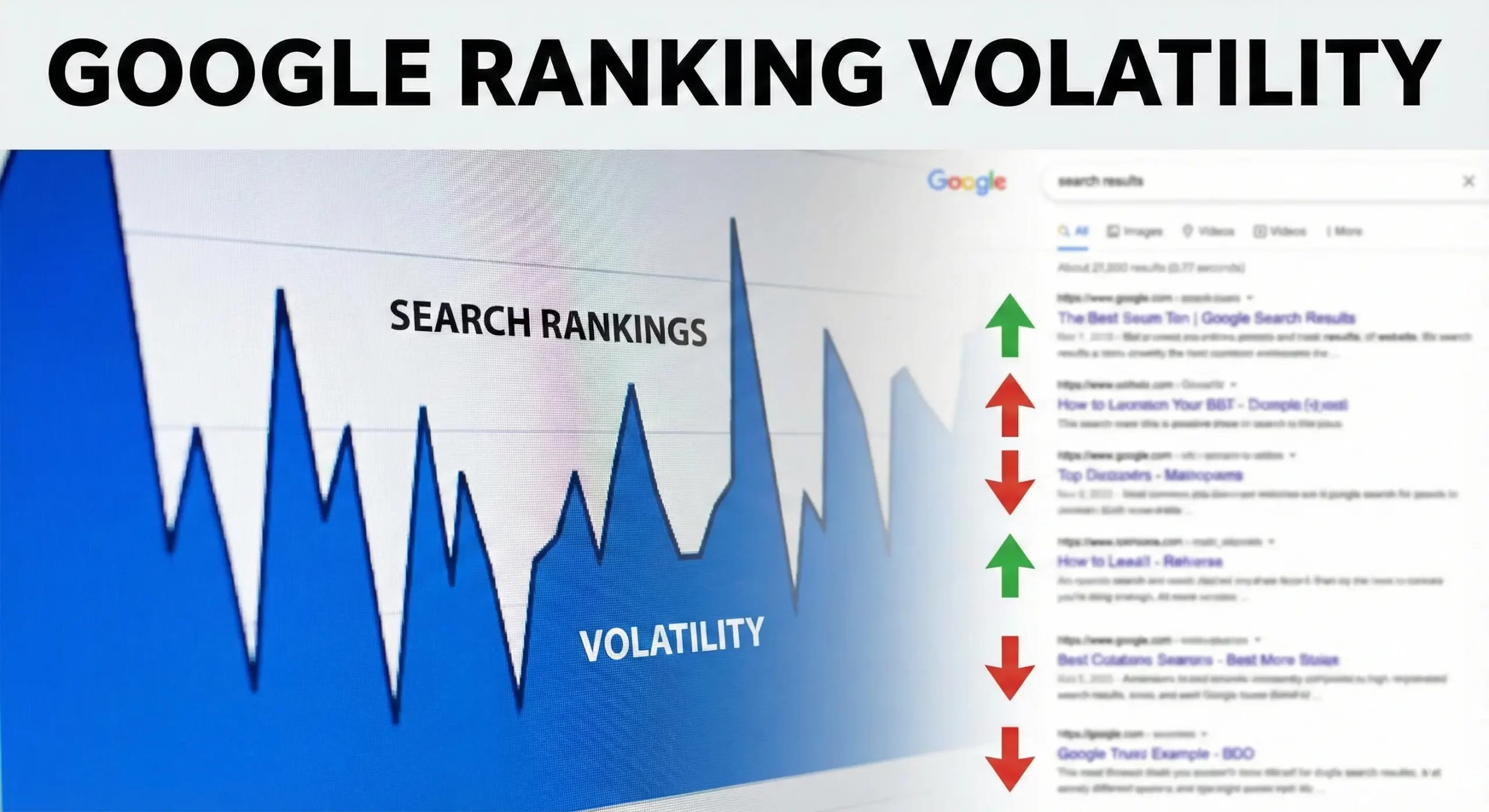
In the first week of January, many site owners reported sharp ranking and traffic swings, with Jan 6 2026 Google ranking volatility quickly becoming a major talking point in the SEO community.
The timing matters: Google’s latest confirmed change, the December 2025 core update, officially began on December 11 and completed on December 29 (US/Pacific), according to the Google Search Status Dashboard.
While Google hasn’t confirmed a new update for January 6, the volatility spike has prompted SEOs to investigate whether this is a post-core “aftershock,” a smaller unconfirmed tweak, or something specific to certain site types. In this article, we’ll break down what’s confirmed, what’s speculation, and how to verify impact using Google Search Console before making any risky changes.
Was there a confirmed Google update on January 6 2026 ?
As of January 7, 2026, Google has not confirmed a ranking (core) update starting on January 6, 2026. Google’s official reference point for confirmed ranking releases ,the Google Search Status Dashboard (Ranking history) ,shows the most recent confirmed event as the December 2025 core update (rolled out Dec 11–Dec 29, 2025, US/Pacific) and does not list a new incident for Jan 6.
That said, the SEO community did report a noticeable spike in ranking volatility around January 6, which some outlets documented as an unconfirmed update/volatility event. In a global article, the most accurate framing is: “unconfirmed volatility”, then advise readers to validate impact using their own data (e.g., Search Console) and follow Google’s guidance on analyzing changes after confirmed core updates.
why did my rankings drop on January 6, 2026?
A rankings drop on January 6, 2026 doesn’t automatically mean your site was “penalized.” The most accurate explanation right now is that many SEOs observed a volatility spike / unconfirmed update event around that date, but Google did not announce a confirmed ranking update for Jan 6. Here are the most common reasons this can happen , and how to tell which one applies to you:
Why your rankings may have dropped on Jan 6, 2026
1) Unconfirmed algorithmic volatility (the simplest explanation)
Industry tracking and community reports documented notable ranking turbulence on/around Jan 6. This is typically described as “ranking volatility” or an “unconfirmed update.”
2) Post–Core Update “aftershocks”
Google’s December 2025 core update officially ran Dec 11 → Dec 29, 2025 (US/Pacific).
It’s common to see continued re-ranking and instability shortly after a core update finishes , especially as systems recalibrate.
3) Your drop is actually a segment drop (not the whole site)
Many “algorithm hit” stories are really one of these:
- a specific site section (e.g., /blog/ or /category/)
- a specific query group
- a specific country
- mobile only vs desktop only
This usually points to intent mismatch, template issues, or technical changes affecting only part of the site.
4) SERP layout/feature shifts reduced clicks (even if rankings didn’t move much)
Sometimes rankings are stable but clicks fall due to:
- more ads
- more SERP features
- changes in the mix of results (videos, forums, local packs, etc.)
5) Technical SEO or deployment issues (very common around “mysterious” drops)
Examples:
- accidental noindex/robots.txt blocks
- canonical changes
- redirects/migration issues
- server errors/slowdowns
- indexing anomalies
6) Tracking/analytics problems (looks like an SEO drop, but isn’t)
GA/GTM changes, consent banners, tag removal, attribution shifts ,can mimic a “Google hit.”
How to confirm the real cause (fast, data-driven)
Google’s own guidance for core update analysis is to wait at least a full week after a confirmed core update finishes, then compare the right date ranges in Search Console.
In Google Search Console, do this:
- Compare Jan 6–7 vs the prior 7 days, then the prior 28 days
- Break down by Pages and Queries to find what actually fell
- Segment by Device and Country
- Check Manual actions + Security issues
- Review Indexing / Pages for spikes in “Excluded” or errors
Then cross-check with an external volatility indicator (to see if this was market-wide):Tools like Semrush Sensor track daily SERP volatility across categories/devices.
Read more: Google’s December 2025 Core Update : Winners & Losers
Jan 6 2026 Google ranking volatility : Is it related to the December 2025 Core Update?
Possibly, but it isn’t confirmed. The December 2025 Core Update officially rolled out from December 11 to December 29, 2025 (US/Pacific). Because the Jan 6 2026 Google ranking volatility happened just a week after the rollout finished, it’s reasonable to treat it as a potential post-core “aftershock” (continued re-ranking as systems settle).
However, there are two important caveats:
- Google did not confirm a new update on January 6. The official ranking release history shows the December 2025 core update as the most recent confirmed event around that period.
- Industry chatter documented January 6 as an unconfirmed volatility event, which could be related to post-core recalibration ,or could be a smaller, unrelated change, bug, or vertical-specific adjustment.
Where can I find official Google announcements about updates?
You can find official Google announcements about Search updates in these places:
- Google Search Status Dashboard → Ranking history
This is the most direct official source for confirmed ranking releases (like core updates) and their timelines. - Google Search Central Blog
Google often publishes guidance and context around major updates and search changes here. - “What’s new” on Google Search Central
A curated hub that aggregates recent official posts, documentation changes, and Search Central updates. - Google Search Central documentation
- Core updates guidance (how to analyze impact, what to do, etc.).
- Documentation updates changelog (what changed recently in Search docs).
Important note: Google has stated it shares notable updates via the Search Status Dashboard, but not every change is announced.
Jan 6 2026 Google ranking volatility: How to check if your site was affected (SEO checklist)
1) Confirm what’s officially confirmed (so you don’t mislabel the event).
Check Google’s Search Status Dashboard (Ranking history) to see whether Google reported a confirmed ranking incident around that time.
2) In Google Search Console, compare the right dates.
In Performance → Search results, use Compare to measure changes around Jan 6 vs the previous period (and vs a longer baseline, like 28 days). This helps you see whether the dip is a one-day spike or part of a wider trend.
3) Identify whether it’s rankings, clicks, or both.
Check Clicks, Impressions, Average position, and CTR. A CTR drop can happen even when rankings don’t move much (SERP layout shifts, new features, etc.).
4) Segment the impact to find the real pattern (this is where most answers appear).
Still in Performance, break down by:
- Queries (what people searched)
- Pages (which URLs dropped)
- Country
- Device (mobile vs desktop)
- Search appearance (rich results, etc.)
5) Determine if the drop is sitewide or section-specific.
If only one folder/template dropped (e.g., /blog/, /category/), you’re likely looking at intent/template/content issues. If it’s sitewide, treat it like a broader quality/technical investigation.
6) Rule out non-algorithm causes before changing content.
In Search Console, quickly check:
- Manual actions / Security issues
- Indexing / Pages for spikes in “Excluded,” errors, or sudden indexing drops
Also review recent releases: robots/ no index /canonical/redirect changes.
7) Apply Google’s core-update analysis discipline (don’t overreact).
Google’s guidance for core updates emphasizes taking note of the rollout window and doing structured comparisons after rollouts complete , avoid panic edits based on a single day.
What to Review First in Google Search Console (GSC) ?
answer three questions fast: What changed? Where did it change? Why might it have changed? Start with these reports , in this exact order.
1) Performance → Search results (your primary diagnosis report)
This is the fastest way to confirm whether you experienced a real ranking/visibility shift or just a click-through change.
Do this first: set date comparisons
- Use Compare:
- Last 7 days vs previous 7 days
- Then Last 28 days vs previous 28 days (to reduce “one-day noise”)
Review these metrics together
- Clicks (traffic impact)
- Impressions (visibility impact)
- Average position (ranking movement)
- CTR (SERP/click behavior)
Quick interpretation
- Clicks ↓ + Impressions ↓ + Position worse → likely ranking/visibility loss
- Clicks ↓ + Impressions stable → CTR/SERP layout issue (more ads/features, stronger snippets, different result mix)
- Impressions ↓ + Position stable → demand shift, query mix change, or indexing/eligibility changes
2) Find the pattern with segmentation (this is where the truth appears)
Most drops are not “sitewide” , they cluster by section, device, or market.
In Performance → Search results, check:
A) Pages
- Sort by Clicks difference and list your biggest losing URLs.
- Ask: Is the drop limited to a folder/template (e.g.,
/blog/,/category/)?
B) Queries
- Identify which query groups lost:
- Brand vs non-brand
- Informational vs transactional
- Short-tail vs long-tail
A concentrated query drop usually points to intent mismatch or SERP competition shifts, not “everything is broken.”
C) Country + Device
- Mobile-only losses often suggest UX/layout issues or different mobile SERP features.
- Single-country losses can indicate localization/hreflang issues or market-specific competition changes.
D) Search appearance
- If you rely on rich results, filter by Search appearance to see if the impact is limited to a specific result type (schema eligibility changes).
3) Performance → Discover (only if you get Discover traffic)
Publishers often mistake a Discover decline for a “Search algorithm hit.”
- Compare Last 7 vs previous 7 and identify which pages/topics lost Discover reach.
4) Indexing → Pages (rule out indexing problems before touching content)
This is your “technical sanity check.” Look for sudden spikes in:
- Not indexed / Excluded
- Patterns like:
- Blocked by robots.txt
- Duplicate, Google chose different canonical
- Crawled – currently not indexed
- Discovered – currently not indexed
If indexing signals worsened around the same time, fix indexability/canonicals/robots first.
5) URL Inspection (for your top losing pages)
Pick 5–10 of the largest-loss URLs and verify:
- Is the page indexed?
- Which canonical did Google select?
- Last crawl date
- Any structured data warnings relevant to your page type
This step often reveals issues that the site-level reports hide.
6) Manual actions + Security issues (fast, high-impact check)
Even if rare, never skip:
- Manual actions
- Security issues
If either exists, it becomes your top priority.
7) Experience & Enhancements (secondary, but useful)
These are usually not the single cause of a one-day drop, but they can amplify losses:
- Core Web Vitals
- Mobile Usability
- HTTPS
- Enhancements (schema reports) if you depend on rich results.
In closing, Jan 6 2026 Google ranking volatility should not be treated as automatic proof of a penalty or a confirmed new Google update. The most responsible approach is to stay data-led: use Google Search Console to pinpoint whether the change is driven by rankings, impressions, or CTR, identify whether the impact is sitewide or limited to specific sections and templates, and rule out technical or indexing issues before making any major content edits.
In an environment where search results can shift quickly, the sites that recover fastest are usually the ones that diagnose precisely, improve deliberately, and avoid reactive changes based on a single turbulent day.
Thanks for the comment. I agree—based on what we’re seeing, this looks more like a post–December core update “aftershock” (continued re-ranking) rather than a confirmed new update.