
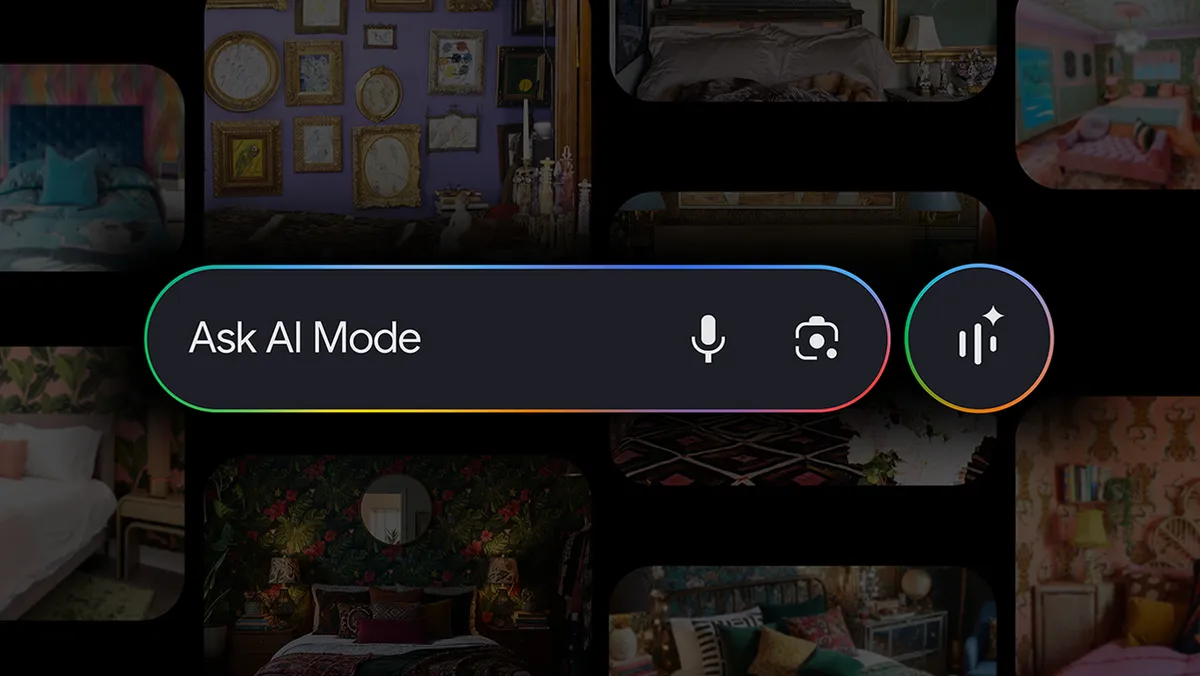
Google AI Mode visual search fan-out signals a major shift in how Google Search interprets visual intent. Instead of treating an image as one request, AI Mode can expand what it recognizes into multiple related searches at the same time. That process helps connect objects, context, style, and likely user goals into a single guided response.
For global SEO teams and AI practitioners, this matters because visibility may depend less on ranking for one query and more on being the most useful source across the many subtopics that emerge from a single visual prompt.
What is Google AI Mode visual search fan-out ?
Google AI Mode visual search fan-out is a Google Search capability in AI Mode that expands a single image based query into many related searches at the same time. Instead of analyzing the picture as one prompt, the system identifies multiple elements inside the image, such as objects, materials, style signals, and context, then generates parallel sub queries to retrieve the most relevant web and product information.
It uses those results to produce a consolidated answer that can include explanations, comparisons, and source links. This approach is an extension of Google’s query fan out technique used in AI Mode, applied specifically to visual inputs to improve coverage and relevance.

How is visual search fan-out different from “query fan-out”?
Query fan-out is the core AI Mode method for text based questions. Google breaks one question into subtopics, runs many related searches in parallel, and then combines what it finds into one response with links.
Visual search fan-out applies the same idea to images. Instead of expanding only the words you type, AI Mode analyzes the picture itself, identifies relevant elements in the scene, and runs multiple searches about the whole image and its parts to understand visual context and deliver more relevant visual answers, often with shopping style results when appropriate.
In short, query fan-out expands a text question into many searches, while visual search fan-out expands a visual prompt into many searches driven by what the system recognizes inside the image.
Is visual fan-out powered by Google Lens or Gemini? or both?
Visual search fan out is powered by both. Google says the experience is rooted in the visual understanding of Google Search using Lens and Image Search, and it is combined with Gemini multimodal and language capabilities to interpret the scene and generate a helpful response. In other words, Lens helps recognize what is in the image, while Gemini helps reason over what was detected, expand it into multiple related searches, and summarize the best results with links
What is the relationship between AI Mode and AI Overviews?
AI Overviews are AI generated summaries that appear directly on the main Google Search results page for some queries, alongside links to supporting sources. They are designed to answer quickly inside the SERP without requiring a full conversational session.
AI Mode is a more interactive search experience that is built for deeper exploration. Google says that under the hood AI Mode uses a query fan out technique that breaks a question into subtopics and runs many related searches in parallel, then synthesizes the findings into a response with citations.
The relationship between AI Mode and AI Overviews
They are part of the same direction in Google Search: adding AI answers with sources. The key difference is the surface and intent. AI Overviews enhance the standard SERP experience, while AI Mode is a dedicated exploration flow that relies more explicitly on query fan out and follow up questions. Google Search Central groups both as AI features in Search and discusses them together from a site owner perspective.
Practically, you can think of AI Overviews as fast summaries for many everyday queries, and AI Mode as a research mode for complex tasks where the user keeps refining the question.

Where the keyword fits: Google AI Mode visual search fan out
Google AI Mode visual search fan-out is a capability inside AI Mode that applies the fan out logic to visual inputs. Google announced that AI Mode can help users search and explore visually and show more visual results, including shopping oriented experiences that draw on the Shopping Graph.
So AI Overviews can sometimes include visuals in the normal SERP, but visual search fan out is specifically about AI Mode expanding what it understands from an image into multiple parallel searches. It is essentially query fan out adapted to multimodal search, often using Google Lens style visual understanding and Gemini style reasoning and language to assemble the response
Why this distinction matters for SEO and AI strategy ?
If you are writing for a global SEO and AI audience, the relationship matters because AI Overviews influence visibility inside the standard SERP, while AI Mode can create many more entry points through query fan out and visual search fan out. That means content can be discovered as a supporting citation for many micro intents rather than only ranking for one head term. Google’s own guidance to site owners emphasizes understanding how these AI features surface content and citations.
What new SEO opportunities come from fan-out ?
Fan out creates SEO opportunities because Google can expand one user prompt into many parallel sub queries and then cite sources that best answer each micro intent. That changes how pages get discovered and rewarded. Instead of competing only for a single head keyword, publishers can earn visibility across a wider set of long tail moments that appear inside Google AI Mode visual search fan out and query fan out flows.
The biggest opportunities include capturing micro intent coverage by publishing focused sections that answer specific sub questions, building stronger entity and topical depth so your site is relevant to more branches of the fan out, improving image context so visual pages can be selected when AI Mode expands an image into related searches, and designing content for comparison and decision support such as pros and cons, alternatives, and use cases that AI can cite.
Fan out also increases the value of internal linking and clear information architecture because AI driven retrieval often pulls supporting passages from multiple URLs on the same domain. Finally, it rewards original data, firsthand experience, and distinctive media because those elements are more likely to be chosen as supporting sources when many near duplicate pages exist.
What industries will be impacted first by visual fan-out (retail, home decor, fashion) ?
Google AI Mode visual search fan-out will impact image heavy industries first because it turns a single photo into multiple parallel searches about products, attributes, style, and intent. The earliest and strongest impact is likely in:
- Retail and ecommerce
Visual fan out is naturally aligned with product discovery. A photo can trigger searches for the exact item, close matches, price ranges, materials, brand alternatives, and where to buy. - Home decor and furniture
Rooms and interior photos contain many objects and style signals. Visual fan out can break a scene into paint colors, furniture silhouettes, lighting styles, textiles, and layout ideas, which makes it powerful for inspiration and shopping journeys. - Fashion and beauty
Outfits and looks are attribute rich. Visual fan out can expand a single image into searches for style names, similar pieces, colorways, fabrics, and occasion based recommendations, which directly influences how users discover brands and products. - Consumer electronics and gadgets
Images of devices or setups can branch into model identification, compatible accessories, comparisons, and troubleshooting content, which creates new entry points for both commerce and publishers. - Travel and local discovery
Photos of places, landmarks, hotels, and food can trigger fan out into location identification, similar destinations, itinerary ideas, and booking options. - Food, recipes, and CPG
A meal photo can fan out into recipe guesses, ingredient lists, substitutions, nutrition angles, and product recommendations, especially for packaged items.
From an SEO perspective, these sectors will see earlier changes in visibility because visual prompts generate many micro intents. Winning will depend on strong image context, clear product or entity data, and content that answers comparison and decision questions that arise from Google AI Mode visual search fan out.
What are the privacy implications of uploading images into AI Mode?
Uploading an image into AI Mode means you are sending visual content to Google Search so it can analyze the image and generate an AI response.
The main privacy implications are:
- Your image can become part of your account activity
AI Mode can save your interactions in AI Mode history and in Google account activity, which can include image based prompts. Google provides controls to view and delete AI Mode history, and notes that deleted items may still appear in My Activity briefly before being removed. - Your interactions may be used to improve Search AI features
Google states that it uses people’s interactions with Search and its AI experiences to develop and improve generative AI in Search. This can include what people search for and the feedback they submit. Google also describes privacy protections for human review, such as disconnecting reviewed data from user accounts and using automated tools to remove identifying or sensitive information. - Personalization may use related Google activity
Google notes that AI Mode can reference previous searches and Search and Maps activity to tailor suggestions, depending on your settings. This means your broader account activity can influence what AI Mode shows you. - Images can contain hidden personal data
Photos may reveal faces, home addresses, school or workplace names, documents, screens, or location metadata. Even if you do not type that information, it can still be present in the image content you upload. - Retention rules can vary by feature
Some Google Search image features historically store uploaded images only for a limited time and do not index them, but the exact handling depends on the specific product flow. Treat AI Mode uploads as content you are actively sharing with Google for processing.
Practical safety tips for users:
Choose images that do not include sensitive personal information. Consider cropping out faces, IDs, addresses, or private screens before uploading. Review and manage your Search history and AI Mode history settings if you want tighter control.
Conclusion:
Google AI Mode visual search fan-out is more than a new feature. It represents a structural change in how Google translates a single visual prompt into many parallel discovery paths and then selects sources to support the final answer.
For SEO and AI teams, the opportunity is clear. Brands that provide strong visual context, precise entity coverage, and decision ready content will be better positioned to appear across the micro intents that fan out from one image. As Google continues to blend multimodal understanding with search retrieval, the most resilient strategy is to build content that helps users identify, compare, and act with confidence.